Rudy Baylor
The RainmakerRudy Baylor’s path from an anxious law student to an inexperienced courtroom advocate is driven by a contradiction: he enters law partly to defy his father’s hatred of lawyers, then discovers how easily the profession can disappoint the people who need it. The Black family’s case against Great Benefit becomes his proving ground, testing not only his legal skill but his willingness to put clients ahead of money. By the novel’s end, he has won neither security nor a lasting place in the profession; he leaves Memphis with Kelly Riker and resolves to leave law behind.
Identity and Formation
Rudy’s decision to become a lawyer takes shape in adolescence, when he realizes that his father despises the profession. His father, an industrial engineer at a ladder company, was repeatedly called on to defend the company in depositions and trials. Rudy watched the strain of those encounters, and the way his father blamed lawyers after a major verdict contributed to the collapse of the company. Rather than inherit his father’s hostility, Rudy came to admire the lawyers who made his father’s life difficult. His choice was a personal act of opposition as well as a career decision.
The family history is not simply a tale of professional rebellion. Rudy’s father became depressed and drank heavily, and Rudy worked waiting tables and delivering pizza to get through college. They spoke only twice during Rudy’s four undergraduate years. After Rudy was accepted to law school, his father stayed in bed for a week. Two weeks later, he fell from a ladder while changing a lightbulb and remained in a coma for a year before his life support was withdrawn. Rudy considered a lawsuit after the funeral, but his mother was not able to pursue one. He also suspected his father might have been drinking and knew that, because his father had no income, the law would assign little economic value to his life. The accident gives Rudy’s interest in legal claims a painful family context: a possible wrong does not automatically become a practical remedy.
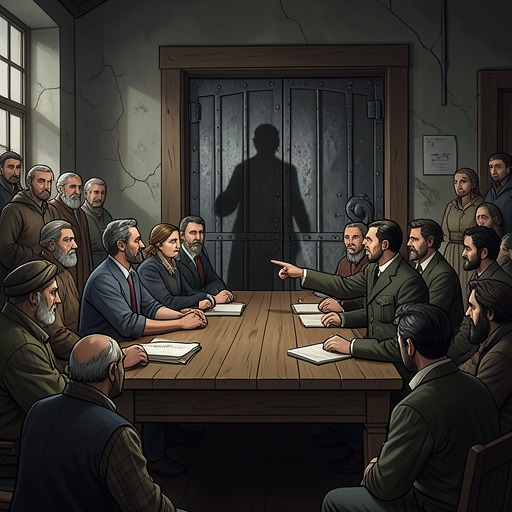
At Memphis State Law School, Rudy is nearing graduation but distrustful of what his education has prepared him to do. In Professor Howard L. Smoot’s elective course for older adults, he meets actual clients for the first time. He and his friend Booker Kane sit behind a table with their names on index cards, trying to look capable while the clients regard them as people who might solve their problems. Rudy is frightened by the responsibility and doubts both law school and legal practice. His unease is part of his formation: he has learned the language of the law before acquiring the confidence or authority that clients assume it confers.
The Black Case and an Unsteady Start
Rudy first encounters Dot Black and Buddy Black through the clinic, where Dot brings a large stack of Great Benefit rejection letters concerning treatment for her son, Donny Ray Black. Rudy initially expects to review the papers, consult a professor, and refer the family to a specialist. He is still a student and uses careful, evasive language when Dot asks whether they have a case. Yet he recognizes that the insurer’s grounds for refusing coverage may not hold up, and the family’s circumstances make delay consequential: Donny Ray is gravely ill, and Dot urges Rudy to hurry.
After researching the policy and the law, Rudy advises the Blacks to sue Great Benefit Life Insurance Company. Dot explains that the family had paid its premiums regularly and had expected the policy to provide the promised help. Her experience as a factory worker and union member informs her view of the dispute: she sees a large corporation taking advantage of people with little money to fight back. Rudy’s own family history has made him sympathetic to working people, but taking the case also means assuming responsibility for clients whose need is urgent and whose trust in him exceeds his experience.
Rudy’s early career is precarious. Brodnax and Speer sells out to Tinley Britt, and the associates are dismissed so the acquiring firm can obtain the partners and their clients without retaining the existing staff. Rudy learns that he, too, has been fired before his job has properly begun. He then seeks work at Jonathan Lake’s firm, where Barry Lancaster hires him as a paralegal for twelve months at an annual salary of $21,000, with a minimum sixty-hour workweek and no benefits during the first year. The firm agrees to represent the Blacks, but Rudy will receive none of the case’s fees. He discloses that he has filed for Chapter 7 bankruptcy; Barry tells him that the bankruptcy will not affect his paycheck. Rudy’s job offers a foothold, not financial security or independence.
Building a Practice and Facing the Court
Rudy’s position at the Lake firm turns out to be vulnerable. After Barry has worked through the Black file with him, Rudy is dismissed from the firm and fears that Barry has used him while seeking control of the case. He takes the dispute to Bruiser Stone, presents a draft complaint and a letter ending the Blacks’ relationship with the Lake firm, and urges that the suit be filed immediately. Bruiser agrees to put his name on the lawsuit and introduces Rudy to Deck Shifflet, an associate with experience reviewing insurance policies. Rudy’s move from employee to advocate therefore begins with an improvised alliance, a client relationship that must be secured, and the fear that another firm may file first.
The courtroom soon forces Rudy to claim a role he has not yet formally attained. He has passed the bar exam, but has not taken the oath or received his license when he appears before Harvey Hale on Great Benefit’s motion to dismiss. Leo F. Drummond objects to his appearance. Rudy says that he will handle the case and that Bruiser filed it on his behalf until he passed the exam. Judge Hale allows the hearing to proceed. Drummond argues that the policy does not cover bone marrow transplants and questions whether Donny Ray, an adult no longer living as a household member, qualifies for coverage. Rudy’s first encounter with the opposing lawyer’s authority punctures its mystique: in court, he recognizes that the two sides occupy tables of equal size, even when the firms behind them possess vastly different resources.
As the case develops, Rudy’s preparation becomes a substitute for experience. During three days of corporate depositions, he questions Great Benefit employees for seventeen hours and produces roughly a thousand pages of testimony. With Richard Pellrod, the claims examiner who wrote denial letters to the Blacks, Rudy works through documents one by one and presses him to account for them. Pellrod maintains that bone marrow transplants are too experimental, while an earlier denial had also blamed Donny Ray’s supposed failure to disclose a preexisting condition. Rudy’s questioning exposes the inconsistency and the effort to shift responsibility for the letters. The examination is tiring and painstaking, but it turns the company’s paperwork into material Rudy can use against it.
Client Duty and the Trial
The settlement offer brings Rudy’s professional obligations into sharp focus. Great Benefit moves from offering nothing to proposing $75,000, and Rudy knows that accepting a settlement could provide immediate money to the family and a substantial fee for him. When he discusses the offer with Donny Ray and Dot, Donny Ray imagines using the family’s share to pay off the house, replace the car, and save for the future, then says he does not want Great Benefit’s money. Rudy tells them he does not want to settle either: he wants to expose the company. He recognizes how easily he could frighten the Blacks into accepting by predicting that the judge might dismiss the case, but rejects that course rather than use their vulnerability for his own financial benefit.
Donny Ray’s death deepens the case’s meaning for Rudy. In the dark of Donny Ray’s room, he thinks about the treatment the policy should have covered and the gap between abundant medical resources and the care the family could obtain. He imagines the unseen person responsible for the denial and vows revenge. His anger is directed not only at a particular claims examiner but at a system that can make a contractual promise useless to a family unable to compel payment. At Donny Ray’s funeral, Rudy also meets Ron Black, the dead man’s twin. Ron confirms that he was willing to donate marrow and had been told by Dr. Walter Kord that he was a perfect match; he agrees to explain this to a jury.
In the closing argument, Rudy does not pretend to possess the polish of a veteran trial lawyer. He speaks to the jurors as a young advocate asking them to give his clients their only chance for justice. He recalls what Dot has endured, explains the policy and the medical evidence, and points out that the defense offered no evidence to contradict Dr. Kord’s account. He then moves from the individual claim to Great Benefit’s conduct across a year. Using Jackie Lemancyzk’s testimony and the company’s figures for policies, claims, and denials, he presents the denial pattern as a deliberate experiment in generating cash. The chalkboard makes the figures easy to follow; his argument connects the company’s aggregate decisions to the fate of Donny Ray Black. When Drummond later invokes Great Benefit’s $200,000 offer, Rudy challenges why the company did not acknowledge its mistakes earlier and tells the jury that the money is not enough if they do not believe the company should be punished. The jury begins deliberating, but Rudy’s moral stand does not ensure that the family will ever collect an award: Great Benefit later goes bankrupt, leaving the prospect of payment in doubt.
Kelly Riker and the Decision to Leave
Rudy’s relationship with Kelly Riker develops alongside the trial and complicates his sense of what it means to help someone. He becomes involved in her efforts to escape an abusive marriage to Cliff Riker, and at one point recognizes that he is falling in love with a married woman while preparing for the bar exam. His early self-image casts him as the person who must rescue Kelly, a view that mixes concern for her safety with his own romantic hopes. As the case approaches its climax, he prepares a divorce filing and seeks emergency relief to keep Cliff away from her. After Kelly is arrested following Cliff’s death, Rudy identifies himself as her lawyer and insists on being present while police question her. He tells investigators about the existing order and Cliff’s history of abuse. The evidence available here does not make Rudy’s intervention uncomplicated; it shows a lawyer acting to protect a client while personally entangled in her future.
After the charges against Kelly are dropped, Rudy leaves Memphis with her. She carries a small bag containing a few toiletries and clothes, while he has little plan beyond finding a place where they can be left alone. They cross into Arkansas and talk about going west to see mountains and snow. Rudy imagines a small college town where Kelly can study and considers teaching history himself. He also decides that he will not practice law, will let his license expire, and will avoid returning to court. The ending turns his professional origin into a rejected destination: the young man who chose law partly because his father hated it departs from the profession after seeing its failures, compromises, and costs at close range.
Narrative Role
Rudy is both the central actor and the first-person narrator, so the reader encounters his progress through a voice that is candid about fear, ambition, self-interest, and error. His confidence grows through concrete tasks—organizing the Black file, questioning company employees, and standing up to Drummond—but his own account repeatedly complicates any simple story of triumph. He needs the case to succeed, yet must resist the money that settlement could bring; he wants to protect Kelly, yet acknowledges that his feelings shape his actions. His career therefore measures the distance between possessing a legal credential and serving as a lawyer. The Black family’s fight gives him a purpose, while its uncertain financial outcome and his departure with Kelly prevent that purpose from resolving into a conventional professional victory.